






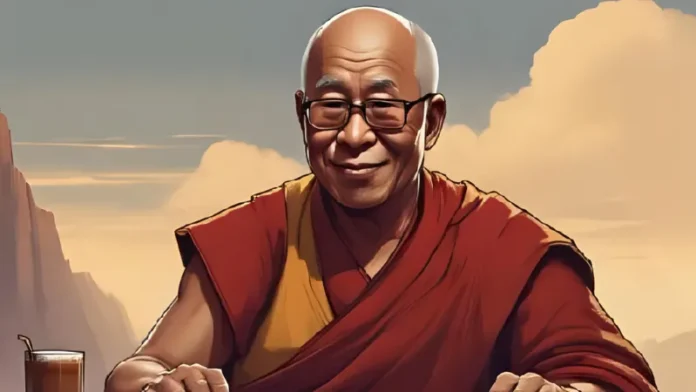

The Dalai Lama remains Tibet’s most powerful voice of hope by embodying peace, nonviolence, and spiritual resilience. Despite exile, his message continues to inspire Tibetans and the world in the pursuit of freedom, justice, and cultural identity.
ManlyZine.com
The Dalai Lama is not just Tibet’s spiritual leader — he is its voice of hope. Despite decades in exile, his unwavering message of peace and freedom continues to resonate with millions, keeping the Tibetan cause alive on the global stage.
Thousands of devoted followers gathered in Dharamshala to celebrate the Dalai Lama’s 90th birthday recently. His extraordinary position as both a spiritual leader and a symbol of peaceful resistance against overwhelming odds remains strong, even though he has lived in exile since fleeing Chinese rule in Tibet in 1959.
The 14th Dalai Lama’s leadership spans more than seven decades. He managed to keep a nation united in exile by building a community that preserves Tibetan culture and identity. His achievement stands out even more given the stark power dynamics – China, a global superpower, has occupied this small region for over 50 years with a population 400 times larger than Tibet’s. Tibetan devotion runs deep, as shown by heartbreaking statistics: 159 Tibetans have self-immolated to protest Beijing’s rule since 2009, including 127 deaths and 26 minors under age 18. This piece explores the Dalai Lama’s identity, his title’s significance in Tibetan Buddhism, his current residence, and why he continues to be Tibet’s most powerful voice of hope while controversy surrounds his reincarnation’s future.
Table of Contents

The Dalai Lama: A Symbol of Tibetan Identity
Tenzin Gyatso, the 14th Dalai Lama, was born in a tiny hamlet called Taktser in northeastern Tibet on July 6, 1935. Religious leaders identified him as the reincarnation of the 13th Dalai Lama, Thubten Gyatso, when he was just two years old. This simple farm boy, originally named Lhamo Dhondup, would become one of the world’s most influential spiritual figures.
Who is the Dalai Lama?

Though he calls himself “a simple Buddhist monk”, Tenzin Gyatso leads Tibet spiritually and serves as the head monk of Tibetan Buddhism. His education started at age six. He studied the Nalanda tradition, which included logic, fine arts, Sanskrit grammar, medicine, and Buddhist philosophy.
Political turmoil with China forced him to take full political leadership of Tibet at age 15. China’s invasion and brutal suppression of Tibet’s national uprising in 1959 left him no choice but to flee to India. From his home in exile in Dharamsala, he has led a peaceful struggle for Tibet’s autonomy that spans six decades.
No other Dalai Lama has served longer or wielded more global influence than Tenzin Gyatso. The Nobel Committee awarded him the Peace Prize in 1989 for his steadfast dedication to non-violence. He made history as the first Nobel Laureate recognized for raising awareness about environmental issues.
Dalai Lama meaning in Tibetan Buddhism
The name “Dalai Lama” combines two words: the Mongolian “dalai” meaning “ocean,” and the Tibetan “lama” meaning “teacher or guru”. Altan Khan first gave this title in the 16th century, which means “Ocean of Wisdom”. Tibetan people speak of His Holiness with deep respect, calling him “Yeshin Norbu” (the Wish-fulfilling Gem) or “Kundun” (The Presence).
Tibetan Buddhists believe the Dalai Lama shows the presence of Avalokiteshvara (known as Chenrezig in Tibetan), the Bodhisattva of Compassion and Tibet’s patron saint. This connection helps explain his spiritual importance. Bodhisattvas achieve enlightenment but choose rebirth to help all beings break free from suffering rather than entering nirvana.
Why he is revered as a spiritual leader
The Dalai Lama’s significance reaches beyond religious leadership. A Tibetan devotee expressed it beautifully: “He is not only a person. He surpasses that and lifts that. I feel as a Tibetan I am elevated by doing this, striving to better myself. He is the shining light for over 6 million Tibetans”.
People revere him for several reasons. His embodiment of Tibetan Buddhism’s core values—compassion, wisdom, and non-violence—guides millions spiritually. He also represents cultural continuity and national identity for Tibetans living in exile and under occupation. Another Tibetan noted, “He is the bridge between independent Tibet and a Tibet that is under occupation”.
During his exile, he has visited more than 67 countries across 6 continents and received over 150 awards and honorary doctorates. His global impact comes from knowing how to share ancient Buddhist wisdom as universal principles of compassion, ethics, and responsibility that strike a chord across religious and cultural boundaries.
His openness to interfaith dialog has earned respect from religious leaders worldwide. By championing universal human values like compassion and tolerance that surpass specific faiths, he has become “the beating heart of Tibetan identity” while emerging as a moral guide for people everywhere.
Exile and Leadership: A Life in Dharamshala
A 23-year-old monk climbed out of his bedroom window in Lhasa on March 17, 1959. The cold Tibetan night marked the start of one of the 20th century’s most important political escapes. This daring escape would change Tibetan history forever and create a new chapter for Tibetan culture away from its homeland.
Where does the Dalai Lama live now?

The 14th Dalai Lama makes his home in McLeod Ganj, a small hillside community within Dharamsala, in India’s northern state of Himachal Pradesh. He first stayed in Mussoorie after reaching India. Indian Prime Minister Jawaharlal Nehru then offered him a permanent home in Dharamsala, a former British hill station, where he settled in 1960.
Dharamsala turned out to be perfect for several reasons. British soldiers once used it as a vacation spot, so the area had good infrastructure and transportation links to other parts of India. The mountainous landscape felt familiar to Tibetan refugees who were used to high altitudes. This small Indian town soon became known as “Little Lhasa” and grew into a worldwide center for preserving Tibetan culture.
The 14th Dalai Lama’s experience from Lhasa to India
Chinese troops brutally suppressed the Tibetan national uprising, which led to mounting tensions and the eventual escape. Thousands of Tibetans surrounded the Norbulingka Palace on March 10, 1959. They begged the Dalai Lama not to attend a performance at Chinese military headquarters, worried it might be a trap. His advisors urged him to leave as protests grew stronger.
The Dalai Lama put on a Chinese military uniform and left secretly with twenty family members and ministers. They faced a dangerous 12-day trek through the Himalayas. His 3,000 loyal bodyguards positioned themselves along the escape route. The group finally reached India at Khenzimane Pass on March 31, 1959.
They first arrived at Tawang in Arunachal Pradesh, where the Dalai Lama visited the historic Tawang Gompa monastery. The group then moved to Bomdila, where Indian government officials welcomed him warmly. India officially granted him political asylum on April 3, 1959.
Building a government-in-exile
The Dalai Lama created the Tibetan exile administration in Mussoorie on April 29, 1959, just weeks after arriving in India. The organization, originally named the Central Tibetan Administration (CTA) of His Holiness the Dalai Lama, carried forward the work of independent Tibet’s government.
The CTA moved to Dharamsala in May 1960 and continues its work there today. The administration had two main goals: to help Tibetan refugees rebuild their lives and to fight for freedom in Tibet. They needed to create schools, keep cultural traditions alive, and support about 80,000 Tibetans who had followed him into exile.
Democratic reforms came quickly under the Dalai Lama’s leadership – changes that old Tibet could never have seen. He established the Commission of Tibetan People’s Deputies on September 2, 1960, which later became the Tibetan Parliament-in-Exile. He presented Tibet’s first democratic constitution in 1963, which guaranteed freedoms of speech, belief, assembly, and movement.
His boldest reform came in 2011 when he handed over his political powers to democratically elected leaders. This historic change ended the centuries-old tradition of Dalai Lamas holding temporal authority. The CTA now has offices in thirteen cities worldwide and continues to represent Tibetans both in exile and in Tibet.
The Reincarnation Controversy and China’s Role
The 14th Dalai Lama’s advancing age has sparked a major controversy about his successor. This dispute pits centuries-old Tibetan Buddhist traditions against China’s political ambitions. The clash expresses the complex relationship between spiritual practices and geopolitical power.
How reincarnation works in Tibetan Buddhism
Tibetan Buddhism follows specific protocols for reincarnation. A systematic search starts for a child who carries their consciousness after a high lama dies. The search relies on the deceased’s prophecies, distinctive physical marks on the child, and the child’s ability to recognize their predecessor’s personal items. This sacred tradition has kept Tibetan spiritual lineages alive for centuries, especially when you have important figures like the Dalai Lama and Panchen Lama.
China’s claim to control the next Dalai Lama
China’s State Administration for Religious Affairs issued Order No. 5 in 2007. This order claims governmental authority over all reincarnation approvals. Beijing officials claim historical precedent gives them this right and point to Qing Dynasty’s involvement in past selection processes. Chinese government representatives have repeatedly stated the Dalai Lama’s reincarnation “must comply with Chinese laws and regulations.”
The Panchen Lama dispute as a precedent
The 11th Panchen Lama’s case shows what might happen in the future. Chinese authorities detained six-year-old Gedhun Choekyi Nyima and his family in 1995 after the Dalai Lama recognized him as the 10th Panchen Lama’s reincarnation. Nobody knows their whereabouts today. Beijing then appointed its own candidate, Gyaltsen Norbu, whom Tibetans call the “Chinese Panchen.” This whole ordeal shows China will forcefully intervene in Tibetan reincarnation matters.
Dalai Lama’s stance on his successor
The current Dalai Lama has taken bold positions about his succession. He might choose to reincarnate as a woman or end the Dalai Lama lineage if it helps the Tibetan people. He emphasizes that only he has authority over his reincarnation process. He issued a formal statement in 2011 that declared the Gaden Phodrang Trust officials would be responsible for recognizing the 15th Dalai Lama if he reincarnates. He might also appoint his successor while still alive or use the traditional method of leaving behind a letter with instructions about his rebirth.
Cultural Suppression and the Fight for Identity

China’s campaign to erase Tibetan identity reaches way beyond the reincarnation dispute. Their strategy works to dissolve the cultural fabric that the Dalai Lama has fought hard to preserve.
Sinicization of Tibetan religion and language
President Xi Jinping’s leadership has pushed “Sinicization” policies to make Tibetans absorb dominant Han culture. Xi made it clear in August 2020 that Tibetan Buddhism must “adapt to socialist society”. The government now controls curricula, texts, and course materials while banning the publication of historically or politically sensitive academic books.
Tibetan language faces planned elimination. State schools in the Tibet Autonomous Region (TAR) have slowly removed Tibetan as their teaching language in the last decade. Lhasa’s state-run College of Buddhism now dedicates about 40% of its study program to political and cultural education instead of religious content.
Boarding schools and forced assimilation
The situation becomes more concerning as nearly one million Tibetan children live separated from their families in government-run boarding schools. Tibet Action Institute reports this number represents about 78% of Tibetan students aged 6-18. These schools focus on Han culture and give children minimal exposure to their native language or traditions.
Children suffer severe psychological effects. Research shows:
- More than one in three children feel “alienation” in these schools
- Many children struggle with separation anxiety and reduced social-emotional skills
- Students often lose their ability to speak Tibetan with parents
Surveillance and censorship in Tibetan regions
Beyond cultural suppression, authorities maintain extensive surveillance systems throughout Tibet. A “Grid Management” system divides counties into cells for close monitoring. A network of “convenience police posts” collects resident biometric data. Authorities had gathered DNA samples from everyone living in Chamdo City by 2019, the TAR’s third largest city with 657,505 residents.
Digital monitoring keeps growing. Tibetans must now install the “National Anti-Fraud Center” app on their phones since 2021. This app asks for permissions that let authorities track movements, record voices, and access private user data. Researchers say this heightened surveillance creates a “society-wide chilling effect.” Tibetans now self-censor, which leads to “a complete breakdown of contact” between those in Tibet and their diaspora community.
Global Support and the Power of Peaceful Resistance

The 14th Dalai Lama turned Tibet’s struggle into a global human rights cause through his steadfast dedication to peaceful resistance, despite facing tremendous odds.
International recognition and Nobel Peace Prize
The Norwegian Nobel Committee awarded the Dalai Lama the Nobel Peace Prize in 1989. They honored him “for advocating peaceful solutions based upon tolerance and mutual respect in order to preserve the historical and cultural heritage of his people”. This prestigious award highlighted his Buddhist peace philosophy that centers on respect for all living things. His vision embraces a shared responsibility for humanity and nature. The Committee valued his readiness to compromise and seek peace even when faced with brutal violations.
After receiving the prize, the Dalai Lama proposed a plan to make Tibet an ecologically stable, demilitarized zone. This would serve as a buffer between major Asian powers. China rejected these proposals, but the Nobel Prize amplified his voice by a lot on the world stage.
The Middle Way Approach vs. Rangzen movement
The Dalai Lama supports the Middle Way Approach—a policy that the Central Tibetan Administration democratically adopted. This approach seeks balance between Tibetan autonomy and Chinese sovereignty. Created in the 1970s, it suggests a self-governing democratic Tibet within China. Beijing would keep control of defense and foreign affairs under this plan.
The Rangzen (independence) movement takes a different stance. Backed by the Tibetan Youth League and many diaspora members, it pushes for complete Tibetan independence from China. Though their goals differ from the Dalai Lama’s Middle Way policy, most independence activists still back his leadership.
Why the Dalai Lama remains a global voice of hope
The Dalai Lama’s lasting influence comes from knowing how to turn Tibet’s specific struggle into universal principles of compassion, non-violence, and human dignity. His view that “nonviolent resistance ushers in more durable and peaceful democracies” strikes a chord worldwide.
His message reaches beyond Tibet and tackles refugee crises, climate change, and interfaith harmony. He wrote in 2016, “While it would be easy to feel hopelessness and despair, it is all the more necessary in the early years of the 21st century to be realistic and optimistic”.
Conclusion
The Dalai Lama has achieved what many thought impossible during his seven decades in exile. He preserved Tibet’s identity against overwhelming odds. His influence now exceeds religious leadership and stands as proof of peaceful resistance’s enduring strength. This “simple Buddhist monk” remains a beacon of hope for millions of Tibetans living in exile and under occupation, despite China’s military and economic might.
Tomorrow brings challenges without doubt. Chinese authorities aggressively push their Sinicization policies while trying to control the reincarnation process. These actions threaten Tibetan cultural survival. Their boarding school system has torn nearly a million Tibetan children from their families, showing how urgent this struggle has become.
The Dalai Lama’s legacy reaches way beyond Tibet’s borders. His steadfast dedication to non-violence has sparked freedom movements worldwide. The Nobel Peace Prize confirmed what people already knew – compassionate resistance proves stronger than weapons.
The Dalai Lama turned his personal suffering into wisdom for everyone. He supports understanding and dialog instead of holding bitterness toward those who wronged him. This approach explains his continued relevance on the global stage as political realities change.
Tibet’s struggle shows us a powerful example of human rights challenges everywhere. We must ask if cultural identity can survive systematic erasure by authoritarian regimes. The Dalai Lama’s voice continues to reach across borders, keeping Tibet’s cause alive in global consciousness.
His life work teaches us that true power comes from moral conviction and compassionate action, not military strength or economic dominance. This enduring message means that whatever China does to silence him, the Dalai Lama will always be Tibet’s most powerful voice of hope.

FAQs
Why is the Dalai Lama considered Tibet’s voice of hope?
The Dalai Lama is regarded as Tibet’s voice of hope because his peaceful advocacy for Tibetan freedom and cultural survival continues to inspire people worldwide.
How does the Dalai Lama promote peace and nonviolence?
Through his teachings, public speeches, and Nobel Peace Prize efforts, the Dalai Lama promotes nonviolence, compassion, and human rights as a path to freedom.
What impact has the Dalai Lama had on the Tibetan freedom movement?
The Dalai Lama has globalized Tibet’s struggle by raising awareness, preserving Tibetan identity, and offering a nonviolent framework for seeking autonomy.
Why is the Dalai Lama still relevant today?
The Dalai Lama remains relevant as a global symbol of spiritual leadership, moral courage, and peaceful resistance, especially regarding Tibet’s future.
What are the core messages of the Dalai Lama’s voice of hope?
The core messages include compassion, freedom, nonviolence, and the resilience of the Tibetan people — forming the heart of his spiritual and political voice.