










Zhang Yiming is the founder of ByteDance, the technology company behind TikTok and Douyin. He built his fortune by developing algorithm-driven content platforms, expanding ByteDance globally, and retaining a major ownership stake. In September 2026, Bloomberg estimated his wealth at more than $105 billion.
ManlyZine.com
Zhang Yiming, the founder of ByteDance, the parent company of TikTok, has become one of Asia’s most prominent technology entrepreneurs. As of September 16, 2026, Bloomberg’s wealth estimate put Zhang’s fortune at more than $105 billion, making him Asia’s richest individual at that point, according to Reuters. His rise is closely connected to ByteDance’s transformation from a small Beijing startup into a global technology company spanning short-form video, advertising, e-commerce and artificial intelligence.
However, it is important to understand that billionaire wealth estimates are not fixed bank balances. ByteDance remains privately held, so Zhang’s net worth depends heavily on estimates of the company’s value and his ownership stake. For example, Forbes listed Zhang at $84 billion on September 15–16, 2026, illustrating why different wealth rankings can report substantially different figures.
Table of Contents
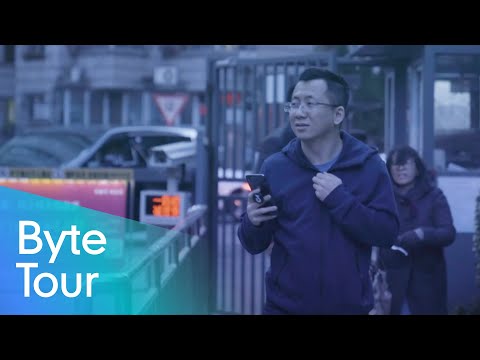
Who Is Zhang Yiming?
Zhang Yiming is a Chinese technology entrepreneur and the principal co-founder of ByteDance. He was born and raised in Longyan, Fujian Province, and later studied engineering at Nankai University, where he initially studied microelectronics before switching toward software engineering.
Unlike some technology billionaires who became famous through a single consumer product, Zhang’s career developed through several stages of internet and software entrepreneurship.
His defining idea was relatively simple:
Instead of building internet products around what people already know, use technology to predict what they are likely to want next.
That philosophy eventually became the foundation for ByteDance’s recommendation-driven products.
Today, ByteDance describes its mission as “Inspire Creativity, Enrich Life.” The company operates products including TikTok, Douyin, CapCut, TikTok Shop, Lark and other services, while its Chinese-market portfolio includes Toutiao and Douyin.
Zhang Yiming’s Early Life and Education
Zhang grew up in Longyan, a relatively small city compared with China’s major technology centers such as Beijing and Shanghai.
His educational background was important because his eventual business model was deeply technological rather than primarily based on traditional media or entertainment.
At Nankai University, Zhang moved from microelectronics toward software engineering. That decision reflected his growing interest in software and internet technology.
After university, he worked in software and internet-related roles before becoming an entrepreneur.
One characteristic that later became important in his career was his interest in systems, algorithms and product design rather than personal celebrity. Zhang eventually became known for emphasizing technology and organizational systems instead of building a public persona around himself.
That distinction helps explain why he remained relatively private even as ByteDance became one of the world’s most valuable technology companies.
The First Big Step: Toutiao
Zhang’s breakthrough did not begin with TikTok.
It began with Toutiao, a personalized news and information platform launched by ByteDance in 2012.
ByteDance itself says the company was founded in 2012 by a team led by Zhang Yiming and Rubo Liang. Toutiao launched in August 2012.
The important innovation was personalization.
Traditional news websites generally presented editors’ selections:
Editor → selects stories → reader consumes stories
Zhang’s model moved toward:
User behavior → algorithm → personalized recommendations → more user behavior → improved recommendations
This created a powerful feedback loop.
Instead of assuming that every reader wanted the same headlines, the system attempted to determine what individual users were most likely to read.
This approach became one of the fundamental technological principles behind ByteDance’s later success.
The Technology Behind ByteDance’s Success
One of the most important reasons for Zhang’s wealth was not simply that TikTok became popular.
It was the underlying recommendation technology and data-driven product model.
Reuters has described TikTok’s recommendation system as being heavily based on user interactions and interests rather than relying primarily on users’ existing social connections.
That distinction matters.
A traditional social network might ask:
“Who do you follow?”
A recommendation-driven platform can instead ask:
“What kind of content are you likely to watch next?”
This can create a very different user experience.
For example, a new TikTok user does not necessarily need hundreds of friends or followers to see interesting videos. The recommendation system can learn from viewing behavior and rapidly personalize the feed.
That creates several business advantages:
- More relevant content can increase engagement.
- Greater engagement provides more behavioral signals.
- More signals can improve recommendation quality.
- Better recommendations can increase advertising opportunities.
- Higher revenue can increase the value of the underlying company.
This technology-first approach became central to ByteDance’s business model.
How Douyin Led to TikTok
ByteDance launched Douyin in China in 2016.
The company subsequently expanded internationally with TikTok. ByteDance says TikTok launched outside mainland China in 2017, and the company acquired Musical.ly later that year. Musical.ly was subsequently merged with TikTok in 2018.
This was a critical strategic move.
Instead of simply translating a Chinese social-media application into another language, ByteDance developed a global short-video ecosystem.
The Musical.ly acquisition was particularly significant because the service already had an international user base, especially among younger audiences.
The combination gave ByteDance:
- an established international audience,
- short-form video technology,
- creator networks,
- cultural knowledge,
- and a path to rapid international expansion.
TikTok then became one of the world’s largest short-form video platforms.
Forbes currently describes TikTok as having more than 1 billion users worldwide.
Why TikTok Became So Valuable
TikTok’s economic importance goes beyond the number of users.
The platform created several interconnected businesses.
1. Digital advertising
Large audiences create opportunities to sell advertising.
2. Creator economy
Creators produce enormous volumes of content, reducing the need for the platform itself to produce everything.
3. E-commerce
TikTok Shop connects entertainment, creators, product discovery and transactions.
4. Data and recommendation technology
The same technological expertise can be applied to different products.
5. Artificial intelligence
ByteDance has increasingly applied its technology infrastructure and capital to AI.
This diversification is important because Zhang’s fortune is tied to ByteDance as a technology company, not simply to TikTok as a video application.
Zhang Yiming Steps Away From ByteDance
One of the unusual parts of Zhang Yiming’s story is that he became extraordinarily wealthy while stepping away from day-to-day corporate leadership relatively early.
In May 2021, Zhang announced that he would transition to a different role focused on long-term strategy, corporate culture and social responsibility. Rubo Liang became CEO.
Zhang subsequently stepped down as chairman later in 2021.
At the time, the decision surprised many observers because ByteDance was still expanding rapidly.
But it also reveals something important about his approach to entrepreneurship.
He did not necessarily view the founder’s role as remaining CEO forever.
Instead, he increasingly focused on ownership, long-term strategy and investment.
Forbes identifies Zhang as ByteDance’s principal co-founder and lists his source of wealth as TikTok and self-made wealth.
So, How Did Zhang Yiming Become Asia’s Richest Person?
The answer can be broken into several stages.
Stage 1: Build valuable technology
Zhang began with software and internet businesses rather than attempting to create a billion-dollar company immediately.
Stage 2: Solve content discovery
Toutiao demonstrated that algorithms could personalize information consumption at massive scale.
Stage 3: Apply the model to short video
Douyin and subsequently TikTok transformed personalized recommendations into an entertainment product.
Stage 4: Expand globally
The Musical.ly acquisition accelerated international expansion and helped establish TikTok outside China.
Stage 5: Monetize the audience
Advertising, commerce and other digital businesses turned enormous user engagement into revenue.
Reuters reported that ByteDance generated approximately $155 billion in revenue in 2024, while its first-quarter 2025 revenue exceeded $43 billion, according to reporting at the time.
Stage 6: Retain a major ownership interest
This is perhaps the most important point.
Zhang did not become extremely wealthy simply because he received a large salary.
His wealth comes primarily from his ownership interest in ByteDance.
When the estimated value of ByteDance increases, the value attributed to Zhang’s stake can rise dramatically.
That is how a founder can become worth tens of billions—or more than $100 billion—without receiving that amount in cash.
Why His Wealth Rose So Dramatically in 2026
The latest jump is closely connected to ByteDance’s expansion into artificial intelligence.
ByteDance is no longer simply a TikTok company.
Its AI ambitions include large language models, AI assistants, video generation and AI infrastructure.
For example, Reuters reported that ByteDance’s Doubao 2.0 was launched in February 2026, with approximately 155 million weekly active users at the time.
Forbes also reported that Doubao had reached approximately 345 million monthly active users in the first quarter of 2026, according to QuestMobile.
ByteDance has also invested heavily in AI infrastructure.
Reuters reported in February 2026 that ByteDance was developing an AI chip known as SeedChip, although the company disputed the accuracy of that report. The same report said the company had committed substantial resources to AI-related procurement and infrastructure.
The broader significance is that investors and private-market participants increasingly value ByteDance not only for TikTok but also for its potential as a major AI company.
The TikTok U.S. Challenge
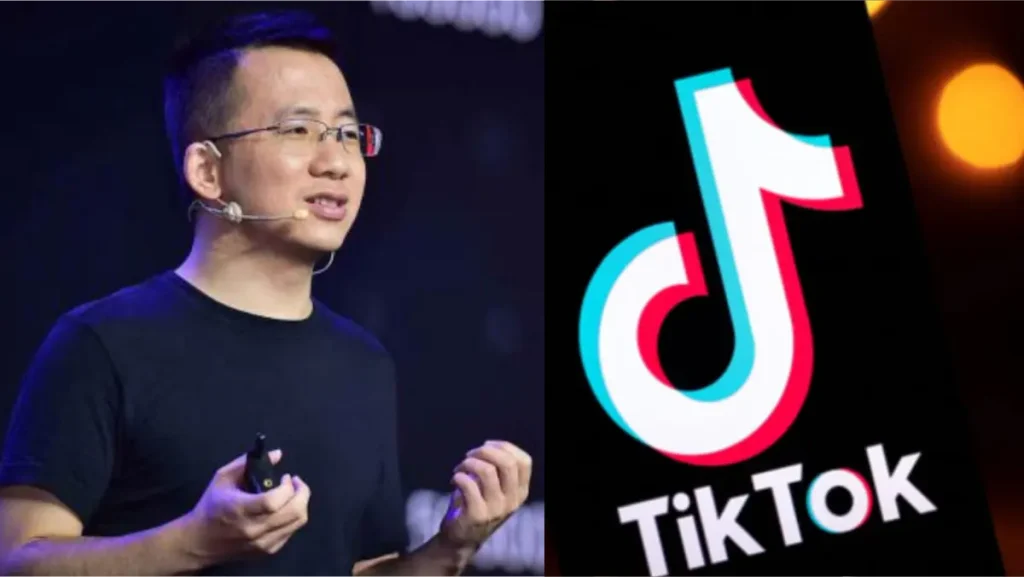
Zhang’s wealth story cannot be understood without discussing TikTok’s political and regulatory problems in the United States.
TikTok became the subject of intense scrutiny because of concerns about data security, Chinese ownership and national security.
The United States eventually required a restructuring of TikTok’s U.S. ownership.
According to Forbes, in 2026 ByteDance ceded control of TikTok’s U.S. business to a consortium involving investors including Oracle and Silver Lake, allowing TikTok to continue operating in the United States.
Reuters has also documented the long-running U.S.-China dispute surrounding TikTok, including congressional action and negotiations over ownership and control.
Despite these challenges, ByteDance continued expanding its broader technology and AI businesses.
This is significant because Zhang’s fortune ultimately depends on the overall value of ByteDance, not on TikTok’s U.S. business alone.
Why Net Worth Estimates Are Different
Readers should be careful when seeing headlines such as:
“Zhang Yiming is worth $105 billion.”
That does not mean Zhang has $105 billion sitting in a bank account.
Billionaire wealth estimates generally calculate:
Estimated company value × estimated ownership stake + other assets − liabilities
For privately held companies, the calculation is inherently less precise than for a publicly traded company.
That is why Bloomberg and Forbes can publish different estimates.
As of September 2026:
| Source | Reported/Estimated Wealth | Context |
|---|---|---|
| Bloomberg, reported by Reuters | More than $105 billion | September 16, 2026 |
| Forbes | $84 billion | September 15–16, 2026 |
Reuters specifically reported the Bloomberg estimate of more than $105 billion and described Zhang as Asia’s richest individual at that time. Forbes’ real-time profile showed $84 billion around the same period.
Therefore, the safest way to describe Zhang in a 2026 article is:
Zhang Yiming was reported by Bloomberg as Asia’s richest individual in September 2026, with an estimated fortune exceeding $105 billion, although other wealth trackers reported lower figures.
That distinction improves factual accuracy and prevents a private-company wealth estimate from being presented as an exact financial fact.
Zhang Yiming’s Business Philosophy
Several themes stand out from Zhang’s career.
Think globally
ByteDance did not limit itself to the Chinese market.
TikTok became a global product, while ByteDance built offices and operations across numerous international markets. The company now says it has more than 150,000 employees across nearly 120 cities.
Technology before celebrity
Zhang rarely built his public image around luxury or celebrity entrepreneurship.
His career was primarily associated with software, algorithms, products and organizational strategy.
Build systems that improve themselves
The recommendation model is especially powerful because user behavior generates feedback that can improve personalization.
Diversify beyond the original product
ByteDance moved from:
news → short video → global social media → advertising → commerce → AI
That diversification has helped reduce dependence on one application.
What Makes Zhang Yiming’s Story Different From a Typical Tech-Billionaire Story?
Zhang’s story is not simply:
“Engineer creates TikTok and becomes rich.”
The deeper story is about the compounding value of technology, distribution, data, ownership and global scale.
A useful way to visualize it is:
Engineering knowledge
↓
Personalized content technology
↓
Toutiao
↓
Douyin
↓
TikTok
↓
Global users
↓
Advertising + commerce
↓
ByteDance’s broader technology ecosystem
↓
AI investment and products
↓
Higher estimated company value
↓
Higher value of Zhang’s ownership stake
That chain explains his wealth more accurately than attributing it simply to TikTok’s popularity.
What Is Zhang Yiming Doing Now?
Zhang is no longer ByteDance’s CEO or chairman, but he remains closely associated with the company’s ownership and long-term value.
His post-management life has also included technology investment. In 2023, reports emerged that he established a Hong Kong-based private investment vehicle, Cool River Venture, focused primarily on technology-related investments.
Meanwhile, ByteDance continues to expand into AI.
The company recently spun off its AI drug-discovery unit, Anew Labs, which raised $290 million in September 2026 at a reported $1.5 billion valuation, while ByteDance retained a 56% stake.
This illustrates how far the company has moved beyond its original identity as a news and social-media startup.
FAQs
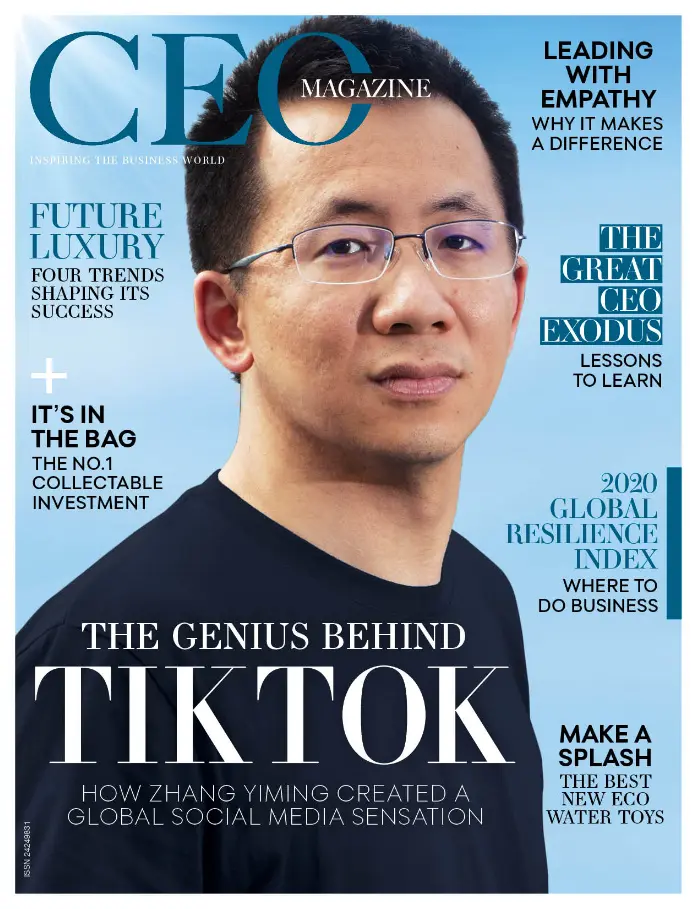
Who is Zhang Yiming, and what is he known for?
Zhang Yiming is the founder of ByteDance, the Chinese technology company behind TikTok and Douyin. He is best known for developing ByteDance into a global technology company using algorithm-driven content recommendations and large-scale digital platforms.
How did Zhang Yiming become rich?
Zhang Yiming became rich primarily through his ownership of ByteDance, rather than through a conventional executive salary. The company’s growth through TikTok, Douyin, advertising, e-commerce, and artificial intelligence increased the estimated value of his ownership stake.
What is Zhang Yiming’s connection to TikTok?
Zhang Yiming founded ByteDance, TikTok’s parent company. ByteDance launched Douyin in China in 2016 and expanded internationally with TikTok in 2017. The company later integrated Musical.ly into TikTok, helping accelerate its international growth.
What is Zhang Yiming’s net worth?
Zhang Yiming’s net worth varies by wealth-ranking source because ByteDance is privately held. In September 2026, Bloomberg estimated his fortune at more than $105 billion, while Forbes reported a lower estimate around the same period.
Is Zhang Yiming still the CEO of ByteDance?
No. Zhang Yiming stepped down as ByteDance CEO in 2021 and later left the chairman position. His role shifted away from day-to-day management while ByteDance continued expanding its global businesses, including TikTok, e-commerce, and artificial intelligence.
Key Facts About Zhang Yiming
| Topic | Information |
|---|---|
| Full name | Zhang Yiming |
| Known for | Founder/co-founder of ByteDance |
| Best-known product connection | TikTok |
| Major Chinese product | Douyin |
| Education | Nankai University, engineering |
| ByteDance founded | 2012 |
| TikTok international expansion | 2017 |
| Musical.ly acquisition | 2017 |
| CEO transition | 2021 |
| Current role | Founder/major shareholder rather than operating CEO |
| 2026 wealth estimate | More than $105 billion according to Bloomberg, as reported by Reuters |
| Forbes estimate around same period | $84 billion |
| Major recent growth driver | ByteDance’s expanding AI business |
Sources: ByteDance, Forbes and Reuters.