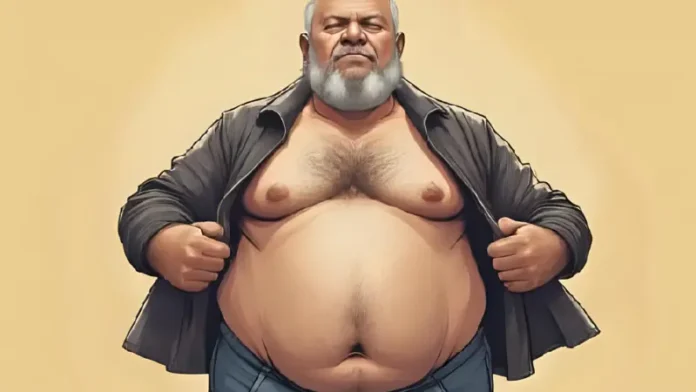
Middle age weight gain primarily results from a natural drop in metabolism, hormonal imbalances, and age-related muscle loss. Science shows these factors—not lack of effort—drive weight changes. However, strength training, higher protein intake, and consistent movement can effectively counter these biological shifts.
ManlyZine.com
Middle age weight gain is real, and science proves it. Americans typically put on 10 to 25 pounds between their 20s and 40s. The scale keeps climbing by about 1.5 pounds yearly through our 50s.
Weight gain comes naturally with age, but learning about why it happens helps us deal with it better. Our body stores fat differently as we age, and it tends to collect around our middle. This becomes a serious health concern when a woman’s waist grows beyond 35 inches or a man’s exceeds 40 inches. These measurements signal a higher risk of heart disease and type 2 diabetes. The challenge gets tougher because we lose 3-5% of our muscle mass every decade after 30, which makes managing weight even harder.
In this piece, we’ll learn about why age brings extra pounds, how hormones affect men and women differently, what lifestyle choices make things worse, and what we can do about that middle-age spread. Here’s the good news – you don’t have to accept weight gain as a natural part of aging. The right knowledge and approach can help you stay healthy during these important years.
Table of Contents

Why weight gain happens as we age
The science behind age-related weight gain shows how various biological processes affect our bodies as we age. Adults tend to gain weight gradually throughout adulthood. Research indicates people gain an average of 0.3 to 0.5 kg (0.7-1.1 pounds) yearly between ages 40 and 66.
Slower metabolism and reduced calorie burn
Our bodies need fewer calories to maintain simple functions as we age. Research shows calorie requirements start decreasing around age 19. Men need about 11 fewer calories each year, while women need 7 fewer. This reduction becomes more evident when we reach our 60s. A 170-pound woman who walks 60-80 minutes daily needs about 2,450 calories at age 20, but only 2,150 calories at age 60.
Scientists once thought metabolism slowed substantially in midlife. A newer study, published by researchers suggests our metabolism stays relatively stable from ages 20 to 60. The substantial declines happen after 60 at about 0.7% per year.
Loss of muscle mass after age 30
Sarcopenia, the age-related loss of muscle mass, starts earlier than most people think. People lose between 3-8% of muscle mass every decade after turning 30. By age 80, most people’s muscle mass drops about 30% compared to what they had at age 20.
This muscle loss matters and with good reason too. Muscle tissue burns more calories than fat tissue, even when resting. Your resting metabolic rate decreases as your muscle decreases. A study of 959 people revealed that 70-year-olds had about 20 pounds less muscle mass and an 11% slower resting metabolism compared to 40-year-olds.
Changes in fat storage and distribution
Your body composition changes dramatically with age, even if your weight stays the same. Total body fat increases while lean tissue decreases. The location where fat accumulates changes substantially.
Age brings more “central” fat storage—particularly visceral fat around internal organs—which creates greater health risks than subcutaneous fat. Women accumulate about 300% more visceral fat with age. Men end up with over twice as much compared to their younger counterparts.
These changes become more noticeable during specific life stages. Women’s visceral fat typically increases from 5-8% of total body fat to 15-20% after menopause. This central fat accumulation raises the risk of insulin resistance, cardiovascular disease, and type 2 diabetes.
The role of hormones and gender differences
Hormones control how our bodies store and distribute fat. Men and women show dramatic differences in their body changes during middle age.
Perimenopause and menopause weight gain in women
Women’s bodies start changing in their mid-40s when perimenopause begins. Their estrogen levels drop while testosterone stays stable. This imbalance changes their metabolism and fat distribution by a lot.
Fat storage moves from women’s hips and thighs to their abdomen. Research shows that visceral fat, which surrounds organs deep in the abdomen, jumps from 5-8% of total body fat before menopause to 15-20% after menopause. These changes happen whatever the total weight might be.
The National Health and Nutrition Examination Survey reveals that women between 40-59 years gain more weight during perimenopause. The average woman puts on about five pounds during this time. On top of that, about 20% of women gain 10 pounds or more.
Testosterone decline in men and its effects
Men’s bodies change with age too. Their testosterone levels slowly decrease, which connects directly to weight gain. Being overweight makes testosterone drop even more. Overweight men over 40 are 2.5 times more likely to have low testosterone than men at healthy weights.
Lower testosterone causes men to lose muscle and gain fat, especially around their stomach. This creates an ongoing cycle – more weight gain leads to lower testosterone, which causes even more weight gain.
How hormonal shifts affect fat accumulation
Both men and women store more visceral fat – the active fat around internal organs. Unlike fat just under the skin, too much visceral fat creates inflammation and raises the risk of insulin resistance, heart disease, and diabetes by a lot.
Hormone changes affect hunger signals and energy balance too. Women’s declining estrogen changes their hunger and fullness signals, which can make them eat more. Both men and women’s resting metabolism slows down, making it harder to manage their weight.
Lifestyle factors that make it worse

Lifestyle factors make middle-age weight gain much worse than biological changes alone. Our modern way of life creates perfect conditions for expanding waistlines during these years.
Sedentary habits and long work hours
People have become less active over the last several years. Adults spend 50-60% of their day sitting around. Jobs that need moderate to vigorous physical activity have dropped from 50% to less than 20%. This transformation has real effects on our weight.
Working longer hours leads to weight gain. A study of nearly 375,000 people showed that those who worked extended hours were 13% more likely to gain weight. Each extra 10 hours worked above average added 762 grams for women and 1.34 kg for men. People with desk jobs gained even more weight (938g for women, 1.68kg for men).
Poor sleep and stress-related eating
About 25% of adults don’t get enough sleep regularly. This lack of sleep throws off hormones that control hunger and fullness. Research shows that too little sleep increases ghrelin (the hunger hormone) and decreases leptin (the satiety hormone).
Women who sleep 5 hours or less gained more weight over 16 years than those who got 7 hours of sleep. They were 32% more likely to gain significant weight (15kg or more). Women tend to eat more during stressful times compared to men.
Overeating in an obesogenic environment
Scientists use “obesogenic environment” to describe today’s world of abundant, convenient, and heavily processed food. Middle-aged adults who balance careers and family responsibilities find it almost impossible to avoid weight gain in this environment.
Ongoing stress makes things worse by triggering cortisol release. This hormone affects fat and carbohydrate metabolism and makes people crave sweet, fatty, and salty foods. High cortisol levels also cut down testosterone production, which leads to less muscle mass and slower calorie burning.
How to manage and prevent middle-age weight gain

Middle age weight gain needs an all-encompassing approach to curb expanding waistlines. You can manage your weight during these transitional years with the right strategies.
Strength training to preserve muscle
Your muscle mass needs resistance training as you age. Research shows that strength training substantially improves lean body mass, which helps maintain your metabolism. You should include exercises that target all but one of these major muscle groups at least twice weekly. One set of 8-12 repetitions using weights heavy enough to tire your muscles works best. This strategy helps offset natural muscle loss that speeds up weight gain.
Eating fewer but more nutrient-dense calories
Your metabolism slows down naturally, so you need fewer calories—but quality matters as much as quantity. Nutrient-dense foods give you maximum nutrition per calorie. Studies show that eating fewer calories with optimal nutrition can moderate aging processes and improve cardiometabolic health. This method reduces both subcutaneous and visceral fat deposits and improves insulin sensitivity.
Incorporating aerobic and resistance exercises
The best results come from combining both exercise types. Health guidelines suggest at least 150 minutes of moderate aerobic activity weekly, along with strength training. Aerobic training like walking or swimming works best to reduce fat mass, while resistance training builds lean mass more effectively. These exercises work together to create optimal body composition changes.
Improving sleep and reducing stress
Bad sleep habits can wreck your weight management by disrupting hunger hormones. Sleep deprivation increases ghrelin (hunger hormone) and decreases leptin (satiety hormone). This leads to higher caloric intake—up to 385 extra calories daily. Stress also triggers cortisol release, which makes you crave high-calorie foods. Your weight management efforts work better when you get 7-9 hours of quality sleep and use stress-reduction techniques.
Considering medical support when needed
Medical support might help when lifestyle changes don’t work well enough. You have options like individual-specific weight management programs, FDA-approved medications, and sometimes, weight-loss surgery. Regular checkups with healthcare providers help track progress and adjust your approach when needed.
Conclusion
Scientific evidence clearly shows that weight gain in middle age is a challenging reality. In spite of that, knowing how our biology works gives us the tools we need to tackle this common issue. Our midsections gain extra pounds due to several complex factors – metabolic changes, muscle loss, hormonal changes, and lifestyle habits all play their part.
Your body naturally changes as you age, but weight gain isn’t a given. Research shows that specific actions can fight these biological changes effectively. Building strength through exercise proves especially valuable when you have to keep vital muscle mass that maintains an efficient metabolism. Your body also needs the right amount of calories and nutrient-rich foods to create lasting eating patterns.
Middle-aged men and women face different hormonal challenges, yet similar solutions help both groups. Women going through perimenopause and menopause can target belly fat directly. Men who experience lower testosterone levels can build muscle to create positive hormonal cycles.
Good sleep and stress control play crucial roles in managing weight. Many people don’t realize how bad sleep throws off hunger hormones or how stress triggers body responses that store fat. Working on these areas often brings unexpected results without strict diets.
Today’s lifestyle makes weight control very difficult. Being aware of these hurdles gives us the ability to make better choices instead of falling prey to our environment. The right mix of targeted exercise, smart nutrition, proper sleep, and less stress creates an effective way to stay healthy through middle age and beyond.
Small changes that you stick to bring lasting results. Instead of seeing middle age as a downward slope, take this chance to improve your health habits and create patterns that will serve you well for years to come.

FAQs
What causes middle age weight gain according to science?
Middle age weight gain is caused by a metabolism slowdown, hormonal shifts, and natural muscle loss after 40. These biological changes make calorie burning less efficient even without major lifestyle changes.
Can I prevent middle age weight gain with lifestyle changes?
Yes. Strength training, higher protein intake, and daily movement help counter metabolism slowdown in middle age and reduce hormonal weight gain by supporting lean muscle mass.
Why does metabolism slow down in middle age?
Metabolism slowdown in middle age happens due to reduced muscle mass and changing hormone levels. Because muscle burns more calories at rest, losing it leads to middle age weight gain even with the same food intake.
Is hormonal weight gain after 40 unavoidable?
Hormonal weight gain after 40 is common but not unavoidable. Balanced nutrition, sleep regulation, and muscle-building exercise can stabilize hormones and minimize middle age weight gain.
What is the best way to lose weight in middle age?
The best way to lose weight in middle age is to build muscle through strength training, increase protein intake, and maintain consistent physical activity. These steps directly combat metabolism slowdown and muscle loss after 40.