



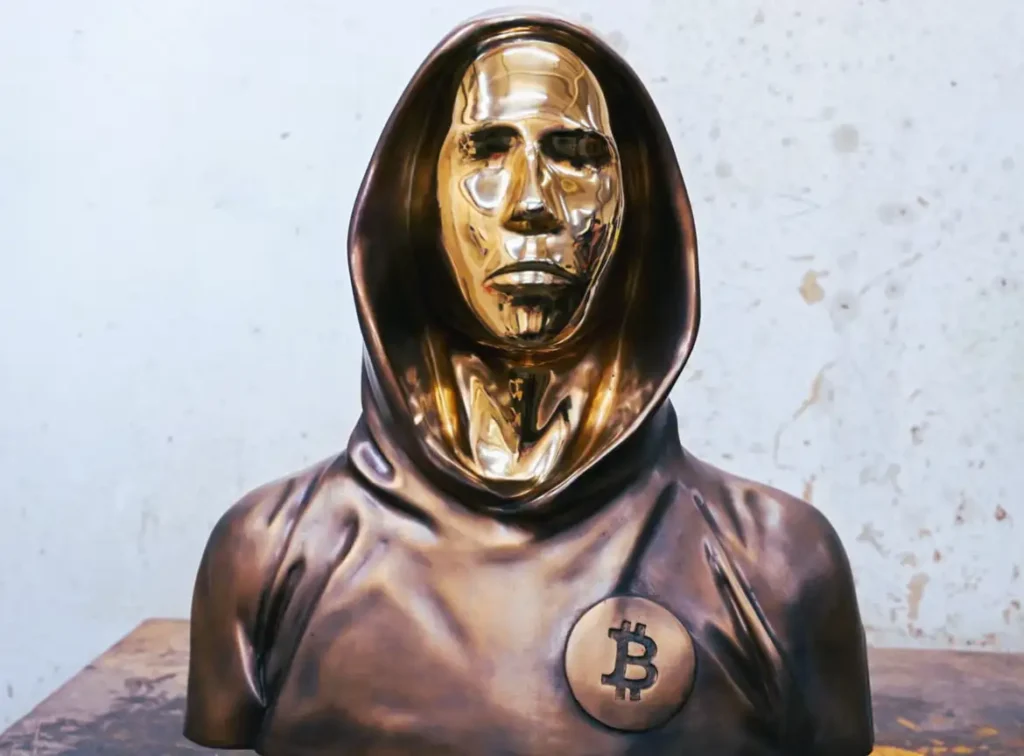
Satoshi Nakamoto, the pseudonymous Bitcoin founder, created the world’s first decentralized digital currency in 2009. By publishing the Bitcoin white paper and mining the Genesis Block, Satoshi introduced peer-to-peer money without banks, inspiring a global financial revolution that continues to shape digital assets today.
ManlyZine.com
Satoshi Nakamoto, the enigmatic Bitcoin founder, transformed the financial world by introducing the first decentralized digital currency in 2009. Through the groundbreaking Bitcoin white paper and the Genesis Block, Satoshi launched a trustless system of peer-to-peer money, sparking a legacy of innovation, decentralization, and digital freedom.
Table of Contents

Origin Story: From White Paper to Working Network
Bitcoin began with a nine-page document titled “Bitcoin: A Peer-to-Peer Electronic Cash System,” published on October 31, 2008. The white paper described how to create digital cash without banks or intermediaries. By using proof-of-work, a distributed ledger, and cryptographic signatures, Bitcoin solved the double-spending problem.
On January 3, 2009, the Genesis Block was mined. Within days, the Bitcoin software was released, and the system was live. Satoshi’s approach of combining theory with immediate implementation set the stage for one of the most important technological experiments of the century.
The Genesis Block: A Timestamp and a Statement
The Genesis Block contained a message hidden in its code:
“The Times 03/Jan/2009 Chancellor on brink of second bailout for banks.”
This was a newspaper headline from that very day. It acted as a timestamp proving the block’s date and as a commentary on the fragility of the banking system during the global financial crisis. Many see it as Satoshi’s subtle manifesto against centralized finance and endless bailouts.
Early Collaborators and the First Transaction
Among the first to engage with Satoshi was Hal Finney, a respected cryptographer. Finney downloaded the software and exchanged emails with Satoshi. On January 12, 2009, Finney received the very first Bitcoin transaction: 10 BTC.
Though the value of Bitcoin at the time was negligible, this transaction symbolized the leap from theory to functioning money. It demonstrated that digital cash without intermediaries was possible.
Why Satoshi Stayed Anonymous

There are several reasons Satoshi might have chosen to remain anonymous:
- Legal risk of inventing a currency outside government control
- Personal security concerns, as holding millions of bitcoins would make the founder a target
- Philosophical reasons to avoid becoming a central authority in a decentralized system
By disappearing, Satoshi ensured that Bitcoin would grow as a leaderless, community-driven protocol. This act reinforced the principle: “Don’t trust people, trust the code.”
The “Patoshi Pattern” and Satoshi’s Alleged Early Mining
Researchers analyzing early blocks discovered what became known as the “Patoshi pattern.” This pattern suggests that a single entity—widely believed to be Satoshi—mined hundreds of thousands of bitcoins in 2009 and 2010. Estimates often place the total near one million BTC.
Remarkably, these coins have never moved. Their dormancy has become part of Bitcoin’s mythology, symbolizing restraint and dedication to decentralization over personal wealth.
Departure and Final Messages
By 2010, Satoshi began reducing his involvement. He handed over code repository access to other developers and communicated less frequently.
In one of the last known messages, Satoshi stated that they had “moved on to other things.” This quiet exit allowed Bitcoin to develop without dependence on its founder, testing the strength of its decentralized governance.
Competing Claims and the 2024 UK High Court Ruling
Over the years, various people have claimed to be Satoshi Nakamoto. The most controversial figure, Craig Steven Wright, publicly insisted he was the creator of Bitcoin.
In May 2024, the UK High Court ruled decisively that Craig Wright is not Satoshi Nakamoto and did not write the Bitcoin white paper. Later that year, Wright was held in contempt of court for persisting with lawsuits based on false claims and received a suspended prison sentence.
This ruling reaffirmed that Satoshi’s identity remains unknown.
Design Choices That Made Bitcoin Endure

Bitcoin’s resilience is rooted in the careful choices Satoshi made:
- Proof-of-Work (PoW): Secures the blockchain by making attacks computationally expensive.
- Difficulty Adjustment: Keeps blocks steady at ~10 minutes despite changes in network power.
- Fixed Supply Cap: A hard limit of 21 million bitcoins ensures scarcity.
- Halving Events: Every four years, rewards halve, simulating digital gold-like scarcity.
- Open Source and Permissionless: Anyone can use, audit, or improve Bitcoin.
These design features explain why Bitcoin has survived for over a decade despite criticism, competition, and political resistance.
Satoshi’s Economic Vision (and Misconceptions)

Satoshi wanted Bitcoin to function as electronic cash, but with a predictable monetary policy unlike fiat currency. Their goals included:
- Trustless transactions without banks
- A transparent and finite money supply
- Reduced dependence on centralized intermediaries
A common misconception is that Bitcoin was designed to replace all money. Instead, Satoshi often wrote about complementary use cases and lightweight payment layers. The protocol itself was designed as a solid foundation, not the entire financial ecosystem.
Cultural Impact and the Myth of the Anonymous Founder
Satoshi’s anonymity has had profound cultural consequences:
- Bitcoin is not tied to a personality cult; it is governed by consensus and open code.
- The mystery keeps Bitcoin in the spotlight, fueling media, academic, and cultural fascination.
- “Don’t trust, verify” became a guiding principle of the crypto world, shaped by the absence of a visible leader.
What If Satoshi’s Coins Move?
If Satoshi’s coins were ever to move, it would cause a massive stir in the crypto markets. Some fear it could spark a sell-off, while others argue it would simply prove that Satoshi is alive.
Because Bitcoin transactions are public, any movement would be visible instantly. Yet, after more than a decade of silence, most believe the coins will never move. This immobility has become a silent assurance to the community.
Common Theories About Satoshi’s Identity
Theories about Satoshi’s identity include:
- A lone cryptographer or coder with expertise in distributed systems
- A group of developers working together under one pseudonym
- British or European origin, based on the Genesis Block’s newspaper reference
- Links to early cypherpunk figures like Hal Finney, Nick Szabo, or Adam Back
None of these theories have ever been proven. The only way to confirm Satoshi’s identity would be cryptographic proof, such as signing a message with the private key from early Bitcoin addresses.
FAQs
Who is Satoshi Nakamoto, the Bitcoin founder?
Satoshi Nakamoto is the anonymous Bitcoin founder who created the 2008 Bitcoin white paper and launched the network in 2009, shaping the future of decentralized finance.
What is the Bitcoin white paper by Satoshi Nakamoto?
The Bitcoin white paper, written by Satoshi Nakamoto, explains the peer-to-peer electronic cash system that solved double-spending and introduced blockchain technology.
What is the Genesis Block message left by Satoshi Nakamoto?
The Genesis Block, mined by Satoshi Nakamoto, includes the message “The Times 03/Jan/2009 Chancellor on brink of second bailout for banks,” symbolizing Bitcoin’s anti-bailout philosophy.
Who received the first Bitcoin transaction from Satoshi Nakamoto?
Hal Finney, a cryptographer and early supporter, received the first Bitcoin transaction from Satoshi Nakamoto—10 BTC—demonstrating Bitcoin’s functionality in real life.
How many bitcoins did Satoshi Nakamoto mine?
Studies suggest Satoshi Nakamoto mined around one million bitcoins in the early years. These coins remain untouched, adding mystery to Bitcoin’s founder and legacy.


